The building
San Nicola in Carcere history
How a Roman fruit and vegetable market became a medieval church: the three temples, the prison in the name, the 1599 façade and what survives today.
Book the Four Seasons concert ↗Quick answer
San Nicola in Carcere is a medieval church built in and from the ruins of three Republican-era temples of the Forum Holitorium, the ancient market for fruit and vegetables. The first definite date for the church is a plaque of 1128, Giacomo della Porta rebuilt it in 1599, and in 1932 the neighbouring buildings were removed to expose the temple remains.
The market that came first
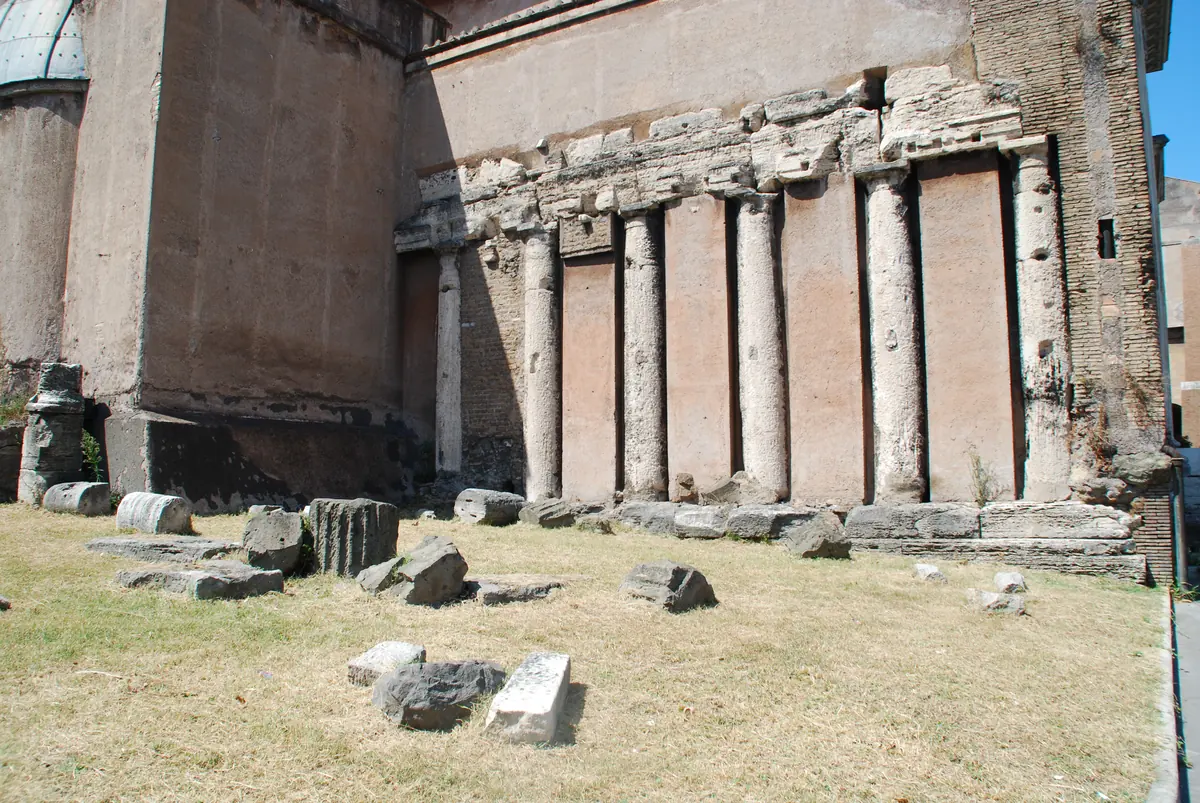
The Forum Holitorium, or Olitorium, was Rome's market for fruit and vegetables, on the slopes of the Capitoline Hill near the river port. A sacred area with three small temples stood there, dedicated to Janus, Spes and Juno Sospita. Wikipedia dates the construction of the sacred area to the Republican age, between the First and the Second Punic War. The temple steps were not aligned, which suggests there was no single town plan.
Three temples
Turismo Roma describes the southern temple, in the Doric order, as probably dedicated to Spes and the smallest of the three. The central Ionic temple is probably Juno Sospita's, the protector of births, and the largest. The northern Ionic temple, possibly Janus's, is the best preserved: its podium and part of its colonnade remain, with a triple row of six columns across the front. All three were restored and rebuilt across the centuries.
From temples to a church
Wikipedia says the first church on the site was probably built in the 6th century and that a 10th-century inscription can be seen on a fluted column by the entrance. The first definite dedication is a plaque on the church dated 1128. The church honours Saint Nicholas because a Greek community devoted to him lived in the area. It was built in and from the ruins of the temples, and their columns are still part of its walls.
The prison in the name
In carcere means in prison. Sources agree that the name refers to a prison linked to the site, but they describe it differently. Turismo Roma says the temples were turned into a prison in the Middle Ages. Wikipedia says a tradition places the ancient jail among the temple ruins, that the name was changed to in Carcere Tulliano in the 14th century through an erroneous identification, and that the prison was in fact Byzantine.
What survives of the temples
Wikipedia says three columns of the Temple of Juno Sospita are incorporated into both the 10th-century and the 1599 façades. The columns of the Temple of Janus can be seen in the northern wall, and six columns of the Temple of Spes are visible in the southern wall. Turismo Roma adds that the central temple's remains lie in the basement near the apse. Stairs under the altar lead to the crypt and to the base of the former temples.
A fortress neighbour
In the 11th century the church was known as the church of Petrus Leonis, after the Pierleoni, a converted Jewish family who rebuilt the nearby Theatre of Marcellus as a fortress. One of the family, Pietro Pierleone, became a cardinal in the 1120s and was elected Pope Anacletus II, though he was later branded a schismatic antipope. The medieval bell tower beside the church began as a fortified tower.
A church of devotions
The church is known for Marian celebrations. One is the Italian Our Lady of Pompeii, whose feast is celebrated here, and the other is the Mexican Our Lady of Guadalupe, a reproduction of whose painting was sent here from Mexico in 1773. The church also remains one of the traditional stational churches of Lent, a church where a station is held on a set day during the season.
Rebuilt in 1599
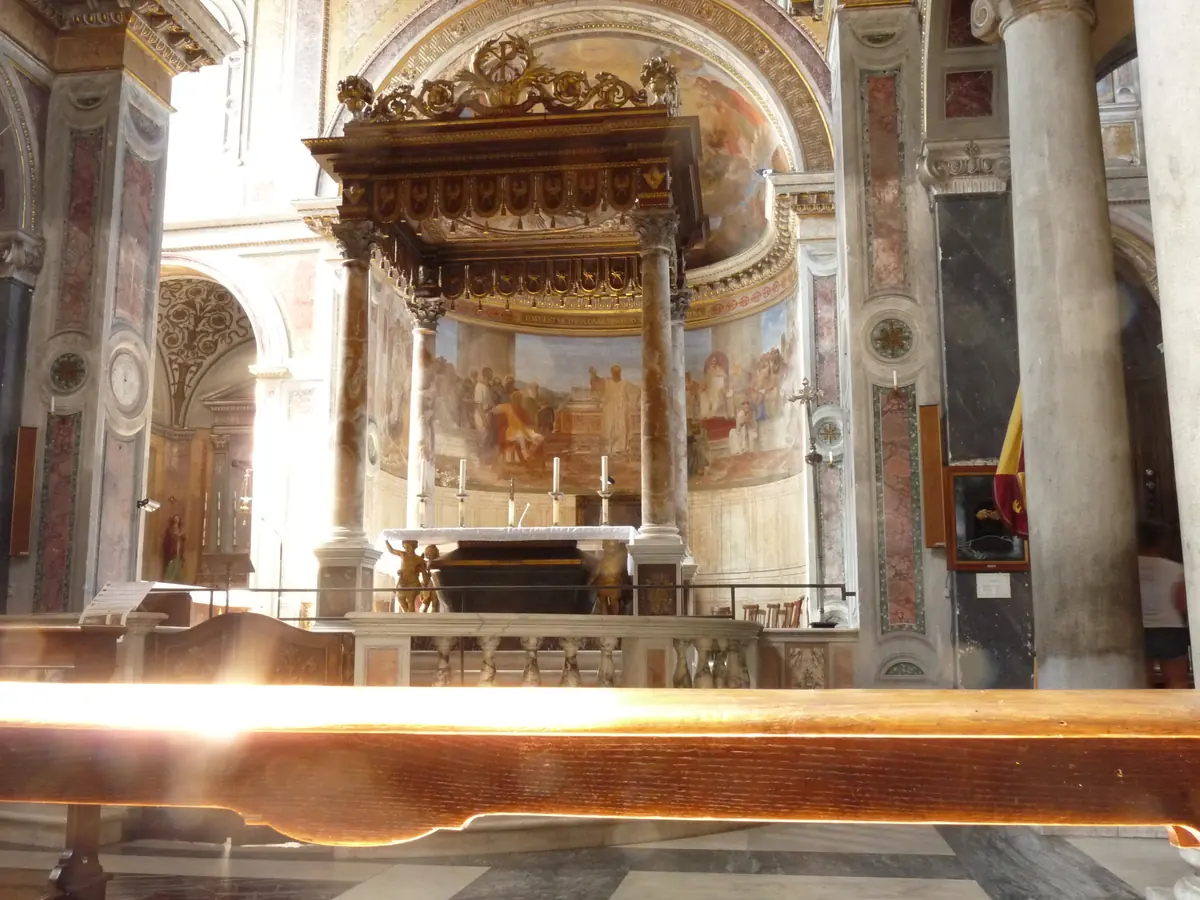
The church was rebuilt in 1599, with a new façade by Giacomo della Porta. Pope Pius IX restored and decorated it in 1865, and in 1932 the adjoining buildings were removed to expose the ancient temple remains. Stairs under the altar lead to the crypt and the base of the former temples, and the church remains a traditional stational church of Lent. The parish was suppressed in 1931, and the clergy of Santa Maria in Campitelli now serve it.
Frequently asked questions
Why is it called in Carcere?
The name refers to a prison linked to the site. Accounts differ on the period: Turismo Roma says the temples became a prison in the Middle Ages, Wikipedia says it was Byzantine.
Which temples are inside the church?
Three Republican-era temples, dedicated to Spes, Juno Sospita and Janus, are built into it. Columns from each are visible in the walls.
When was the façade built?
In 1599, designed by Giacomo della Porta. The medieval bell tower beside it was not altered.
Sources